The Supermarket Is Designed to Make You Eat Worse — Here's How to Fight Back
You're Not Impulsive. The Store Is Just Really Good at Its Job.
You went in for chicken, spinach, and Greek yogurt. You came out with a family-size bag of chips, two candy bars from the checkout lane, and a "limited time" frozen meal you'll probably never eat. Sound familiar?
Don't beat yourself up. That wasn't a lapse in willpower — it was the store doing exactly what it was designed to do. Modern supermarkets are sophisticated retail environments built around decades of consumer psychology research. Every square foot is intentional. And once you understand the playbook, it becomes a lot harder to fall for it.
The Architecture of Influence
Let's start with the layout itself, because this is where the manipulation begins before you even pick up a single item.
Why the Essentials Are Always in the Back
Milk, eggs, bread, butter — the things almost every shopper needs. In virtually every major grocery chain across the US, these staples are placed as far from the entrance as possible. That's not convenience. That's strategy. The longer your path through the store, the more products you're exposed to, and the higher the probability that something extra ends up in your cart.
The fresh produce section near the entrance is another calculated move. Filling your cart with colorful, healthy items first creates a "health halo" effect — psychological research shows that when shoppers feel virtuous early in their trip, they're more likely to reward themselves with indulgent purchases later. You earned those chips with those kale bunches, right?
Eye Level Is Buy Level
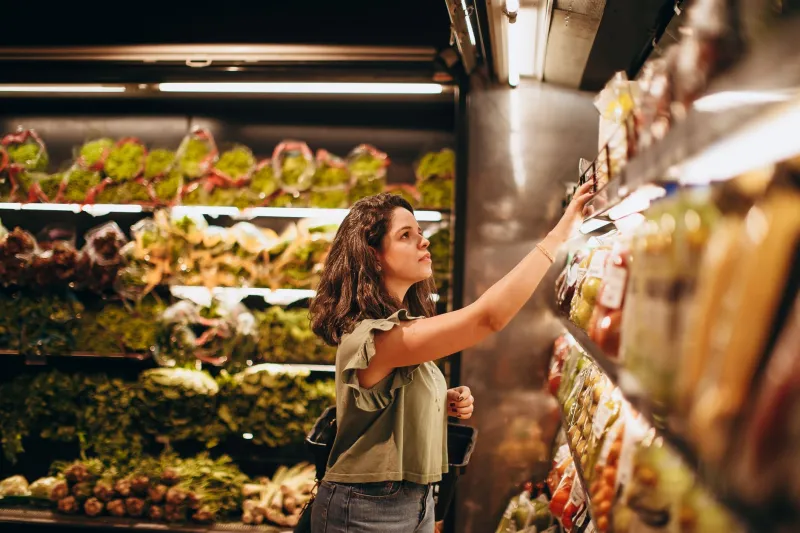
Retailers pay premium placement fees to get their products positioned at eye level on shelves — roughly between waist and shoulder height for adults. These are the processed, high-margin items that companies want you to grab first. Healthier options, store-brand products, and lower-cost alternatives are more often found on the top shelf (inconvenient to reach) or the bottom shelf (requires bending down). Next time you're in the cereal aisle, look up and look down. You'll be surprised what you find.
End Caps and "Sale" Signage
Those displays at the end of each aisle look like deals. They're often not. End caps are premium real estate that brands pay to occupy, and the products placed there aren't always on sale — they're just displayed in a way that implies urgency and value. Red sale tags and bold discount signage trigger a similar response, even when the "savings" are minimal. Studies have found that consumers consistently overestimate how much they're saving on end-cap and promotional items.
Decoding the Packaging
Once you're reaching for a product, the label takes over. And food packaging is its own science.
"Natural," "Wholesome," and Other Meaningless Words
The FDA has no formal definition for the word "natural" on food labels. Neither does "wholesome," "artisan," or "farm-fresh." These are marketing terms, not regulated nutritional claims. They're designed to create an emotional association with health and simplicity — even when the ingredient list tells a very different story.
Words that do carry regulatory weight: "organic" (USDA-certified), "low sodium" (less than 140mg per serving), "reduced fat" (at least 25% less fat than the original product), and "whole grain" (when it appears as the first ingredient). Learn to scan for these specifically and ignore the decorative language.
Serving Size Sleight of Hand
This one is a classic. A bag of chips might advertise 150 calories per serving, but flip it over and you'll find a serving size of "about 7 chips" — and the bag contains four servings. The calorie count looks reasonable until you realize you've eaten the whole bag. Always check the number of servings per container and do the math before assuming a product fits your goals.
Front-of-Package Claims vs. Ingredient Reality
Bold claims on the front of a box — "good source of fiber," "made with real fruit" — are designed to catch your attention and stop your analysis there. The real story is always in the nutrition facts panel and the ingredient list. Ingredients are listed in descending order by weight. If sugar (in any of its many forms: high fructose corn syrup, cane juice, dextrose, maltose) appears in the first three ingredients, that product is primarily sugar, regardless of what the front of the box says.
Practical Strategies for Shopping With Intention
Knowing the tricks is half the battle. Here's how to put that knowledge to work on your next trip.
Eat Before You Go
This one is almost embarrassingly simple, but the research behind it is solid. Shopping hungry amplifies impulsive buying and increases the likelihood of grabbing high-calorie, convenience foods. Even a small snack before you head out can meaningfully reduce the number of unplanned items in your cart.
Write a List and Treat It Like a Contract
A shopping list isn't just a memory aid — it's a decision made in a calm, goal-oriented state that protects you from in-store impulse triggers. The key is specificity. "Protein" is easy to deviate from. "Chicken breast, canned tuna, eggs" is much harder. The more specific your list, the less room there is for the store's architecture to redirect you.
Shop the Perimeter — But Selectively
You've probably heard the advice to "shop the perimeter" of the grocery store, where fresh produce, meat, dairy, and bakery sections typically live. This is genuinely good advice as a starting point, but it's not a blanket rule. Bakery sections are perimeter. Prepared food counters are perimeter. Use the perimeter as a guide, not a guarantee.
Don't be afraid of the inner aisles entirely — that's where you'll find canned beans, whole grains, olive oil, nuts, and frozen vegetables. The goal isn't to avoid the middle of the store. It's to navigate it with a specific list and a skeptical eye.
Give Yourself a Beat Before Adding Anything Unplanned
If something not on your list catches your eye, pause for ten seconds before it goes in the cart. That's it. Just ten seconds. Ask yourself: did I plan to buy this? Do I actually need it? Is this going in my cart because I want it or because the display made it look appealing? You'll be surprised how often that brief pause is enough to redirect you.
Shop Smarter, Not Harder
The grocery store isn't your enemy — but it's not your ally either. It's a business environment optimized for revenue, and your health goals aren't part of that equation. The good news is that once you understand the design, you stop being a passive participant in it.
Know the layout. Read past the front of the package. Trust your list more than your in-store impulses. Small shifts in how you shop add up to real differences in what you eat — and that's exactly the kind of consistent, practical change that builds a healthier life over time.