Stop Blaming Yourself for Bad Eating Habits — Your Environment Is the Real Problem
The Willpower Myth Nobody Wants to Hear
Let's get something uncomfortable out of the way: willpower is not a sustainable nutrition strategy. Not for you, not for anyone.
This isn't a motivational speech. It's neuroscience. Studies consistently show that willpower operates like a battery — it depletes with every decision you make throughout the day, a phenomenon researchers call decision fatigue. By the time you're standing in front of the pantry at 9 PM after a long workday, you're running on fumes. The cookies aren't winning because you're weak. They're winning because your brain is exhausted and defaulting to whatever requires the least effort.
And yet, the diet industry has spent decades selling you the idea that discipline is the missing ingredient. Another journal, another meal plan, another 30-day challenge — all built on the assumption that you just need to want it badly enough. That approach fails the vast majority of people, and the research backs that up. Studies on long-term dietary behavior consistently find that environmental cues and structural habits are far stronger predictors of what people actually eat than stated intentions or motivation levels.
So what actually works? Redesigning the world around you so that the healthy choice becomes the easy choice.
The Science Behind Environment-First Eating
Behavioral economist Brian Wansink spent years studying how environmental factors influence food choices — things like plate size, food visibility, and container placement. While some of his specific findings have been revisited over the years, the broader principle his work helped popularize has held up across a wide body of research: people eat what's in front of them, and they eat less when eating is made even slightly more inconvenient.
This principle is the foundation of what's sometimes called "choice architecture" — the idea that structuring your environment to favor certain behaviors dramatically reduces the cognitive load required to make good decisions. Applied to nutrition, it means you don't have to white-knuckle your way through cravings. You just have to make the unhealthy option a little less accessible and the healthy option a little more obvious.
Here's how to do exactly that.
Fix #1: Reorganize Your Kitchen Like a Nutritionist Would
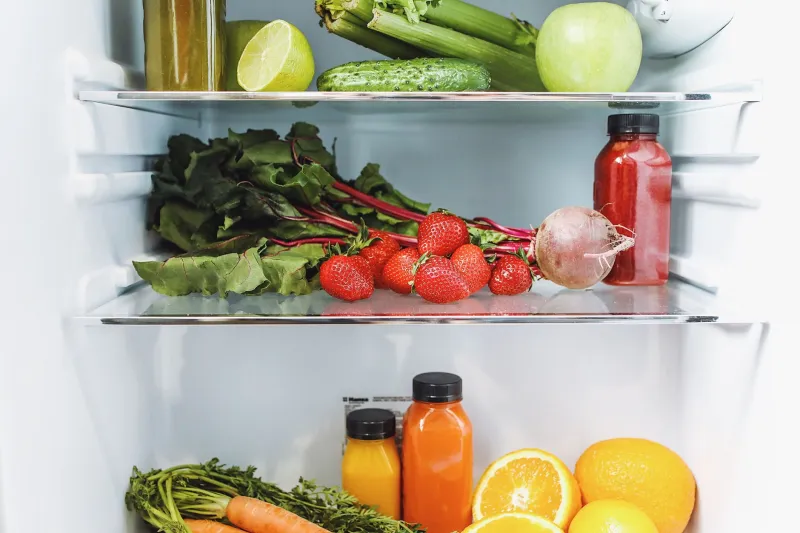
The most powerful real estate in your kitchen is eye level — in your fridge, on your counter, in your cabinets. Whatever lives there gets eaten. Whatever gets pushed to the back or stored on a high shelf gets forgotten.
Do a single reorganization session this weekend. Move fresh fruit to the front of the fridge. Put cut vegetables in a clear container at eye level. Relocate chips, cookies, and processed snacks to high shelves, back corners, or opaque containers. You're not throwing anything away — you're just making the healthy stuff the path of least resistance.
Research published in the journal Health Education & Behavior found that people who kept fruit on their countertops weighed significantly less than those who kept cereal or soda in plain view. The food you see is the food you eat. Use that to your advantage.
Fix #2: Rethink Your Grocery Store Strategy
Most people shop hungry, without a list, and with a vague intention to "eat better this week." That's a recipe for a cart full of things you didn't plan to buy.
Two changes make an outsized difference here. First, never shop hungry — have a snack before you go, even something small. Research on hungry shoppers consistently shows they buy more calorie-dense, highly palatable foods than their satiated counterparts. Second, shop the perimeter first. The outer edges of most American grocery stores are where the whole foods live: produce, proteins, dairy. The interior aisles are where the ultra-processed stuff is concentrated. Fill your cart before you venture inward, and you'll naturally leave less room — and less budget — for the stuff that doesn't serve you.
Fix #3: Make Meal Prep a System, Not a Sunday Chore
The term "meal prep" has taken on an almost aggressive, all-or-nothing connotation — like you need to spend four hours on Sunday cooking seventeen matching containers of rice and chicken. That's not what we're talking about.
What actually helps is what nutrition researchers call "food preparation behaviors" — small, consistent actions that reduce friction when hunger hits. Wash and chop vegetables when you get home from the store so they're grab-and-go ready. Hard-boil a batch of eggs on Monday. Keep a container of cooked grains in the fridge. These aren't elaborate meals — they're building blocks that make assembling a healthy plate take two minutes instead of twenty.
When healthy food requires zero prep time and unhealthy food requires a drive or a delivery wait, the math starts working in your favor.
Fix #4: Use Smaller Plates and Taller Glasses (Seriously)
This one sounds almost too simple to be real, but the evidence is surprisingly robust. People consistently eat less when they use smaller dishware, largely because the brain judges portion size relative to the size of the plate. A normal serving on a 12-inch plate looks small; the same serving on a 9-inch plate looks generous.
Similarly, people pour and consume more from short, wide glasses than from tall, narrow ones — even when they're trying to be mindful. Swapping out your glassware and plates doesn't require any willpower at all, and it can meaningfully reduce caloric intake without you ever feeling deprived.
Fix #5: Build a "Default Meal" Rotation
Decision fatigue is most dangerous at mealtime. When you're tired and hungry and have no idea what to make for dinner, you're one click away from ordering a large pizza. The antidote isn't more motivation — it's fewer decisions.
Identify five to seven meals you genuinely enjoy that are reasonably nutritious and that you can make without much thought. These become your defaults. Post them on the fridge, keep the ingredients stocked, and stop trying to reinvent dinner every night. Variety is great for the weekends. Consistency is what actually sustains healthy eating habits through a busy week.
This approach mirrors what behavioral scientists call "implementation intentions" — pre-deciding what you'll do in a given situation so your tired, depleted brain doesn't have to figure it out in the moment.
Eat Better Without Fighting Yourself
None of this requires a dramatic personality transformation or an iron will. It requires a Saturday afternoon, a trip to the grocery store, and a willingness to rearrange a few things in your kitchen. The goal isn't perfection — it's making the default choice a better one.
When your environment does the heavy lifting, healthy eating stops being a battle and starts being just... what you do. That's where lasting change actually lives.