The Sneaky Way Your Nightly Screen Habit Is Stealing Your Fitness Results
You crushed your workout. You ate clean. You even skipped the late-night chips. But you're still waking up feeling like something ran you over — and your fitness gains have basically flatlined. Sound familiar?
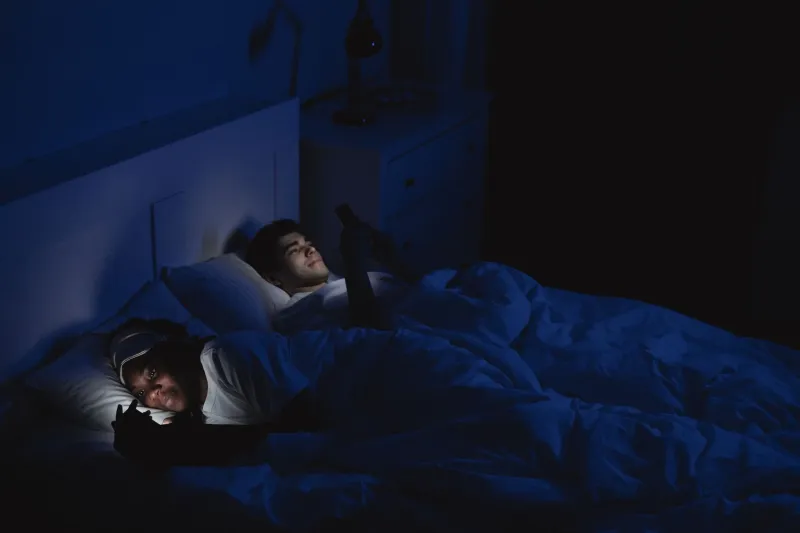
Before you overhaul your training program or stress about your protein intake, take a look at what you're doing in the two hours before you fall asleep. Because if you're scrolling Instagram, binge-watching Netflix, or doom-scrolling the news on your phone, you might be quietly dismantling every good thing you did that day.
The culprit? Blue light. And it's doing way more damage to your fitness than most people realize.
What Blue Light Actually Does to Your Brain
Here's the quick science without the textbook vibes: your brain runs on a roughly 24-hour internal clock called your circadian rhythm. One of its most important jobs is triggering the release of melatonin — the hormone that tells your body it's time to wind down and sleep.
The problem is that your brain takes its cues from light. Specifically, it's tuned to respond to the blue wavelengths in natural sunlight, which signal daytime and alertness. When the sun goes down, the absence of that blue light is what gives your brain the green light to start pumping out melatonin.
Now guess what your phone, tablet, laptop, and TV are absolutely loaded with. Yep — blue light. Using those devices in the evening essentially tells your brain it's still midday. Melatonin production gets delayed or suppressed, you feel wired when you should be winding down, and the quality of your sleep tanks even if you're technically in bed for eight hours.
Why Bad Sleep Hits Fitness People Harder
Everybody needs good sleep, but if you're actively trying to build muscle, lose fat, or improve your athletic performance, poor sleep is basically sabotage in slow motion.
Here's what's happening while you sleep — or should be happening. Your body releases the bulk of its growth hormone during deep sleep stages. That hormone is critical for muscle repair and growth after exercise. Without enough quality deep sleep, your muscles don't recover properly, which means you're heading back into your next workout already running a deficit.
On the fat loss side, poor sleep throws your hunger hormones completely out of whack. Ghrelin (the hormone that makes you hungry) spikes, while leptin (the one that tells you you're full) drops. Translation: you wake up hungrier, crave higher-calorie foods, and have less mental bandwidth to make smart choices throughout the day. Studies have consistently shown that sleep-deprived people consume significantly more calories — not because they lack willpower, but because their hormones are literally pushing them toward the pantry.
And if you're training for endurance or performance? Reaction time, coordination, and cardiovascular efficiency all take measurable hits when sleep quality suffers. You can't out-train a bad night's sleep.
The Two-Hour Window That Changes Everything
Researchers generally agree that the two hours before your intended bedtime are the most critical window for protecting your melatonin production. That's when your brain is most sensitive to light exposure, and when screens do the most damage.
This doesn't mean you need to go full Amish every evening. It means being intentional about how you use that window. Small changes here compound quickly — better sleep tonight leads to better recovery tomorrow, which leads to better workouts, which leads to actual results. It's one of the highest-return habits you can build.
Practical Ways to Dial Back the Blue Light Tonight
Turn on Night Mode — but don't stop there. Both iPhones and Android devices have built-in settings (Night Shift on iOS, Night Light on Android) that shift your screen's color temperature toward warmer tones in the evening. Set these to kick in automatically around 8 or 9 PM. It won't eliminate blue light entirely, but it takes the edge off significantly.
Try blue light filtering apps. Apps like f.lux (great for laptops and desktops) go further than built-in settings and let you customize the intensity based on time of day. Many users find the difference noticeable within the first week.
Grab a pair of blue light blocking glasses. If you genuinely can't avoid screens in the evening — whether it's work, a late-night Netflix habit, or video calls — amber-tinted blue light glasses are a legitimate tool. They look a little goofy, but they work. Brands like Felix Gray and Swanwick have decent options at various price points.
Drop the brightness, too. Lower screen brightness reduces the overall intensity of light hitting your eyes, which complements the color temperature shift. Combine both for a bigger effect.
Set a hard cutoff if you can swing it. Even 30 minutes of zero screen time before bed makes a measurable difference. Use that window for reading a physical book, light stretching, journaling, or just having an actual conversation with someone in the room.
Evening Swaps That Actually Support Recovery
Replacing screen time isn't about deprivation — it's about trading a habit that actively works against you for one that works with you.
Light stretching or yoga is an easy win. It helps your nervous system shift from sympathetic (fight-or-flight) to parasympathetic (rest-and-digest) mode, which primes your body for deeper sleep. Even 10 minutes of gentle movement can lower your heart rate and reduce cortisol levels before bed.
Foam rolling is another solid option. It's quiet, screen-free, and helps work out the tightness from your training sessions so your muscles can actually recover overnight.
If you're a podcast person, switch from video to audio. Put your phone face-down, hit play, and let your eyes rest while your ears do the work. It's a surprisingly easy transition.
And if you want to eat something in the evening, consider a small, protein-rich snack like Greek yogurt or cottage cheese. Casein protein digests slowly and has been shown to support overnight muscle protein synthesis — a nice little bonus while you sleep.
The Bottom Line
Fitness results don't just come from what you do in the gym or at the dinner table. They come from the full 24-hour cycle — and the hours you spend sleeping are arguably the most productive of all, as long as you're actually getting quality rest.
Your phone isn't evil. But using it right up until you close your eyes is quietly robbing you of gains you've already earned. Protect your sleep the same way you protect your workouts and your nutrition, and you'll be surprised how quickly everything else starts clicking into place.
Move more. Eat better. And for the love of your gains — put the phone down.