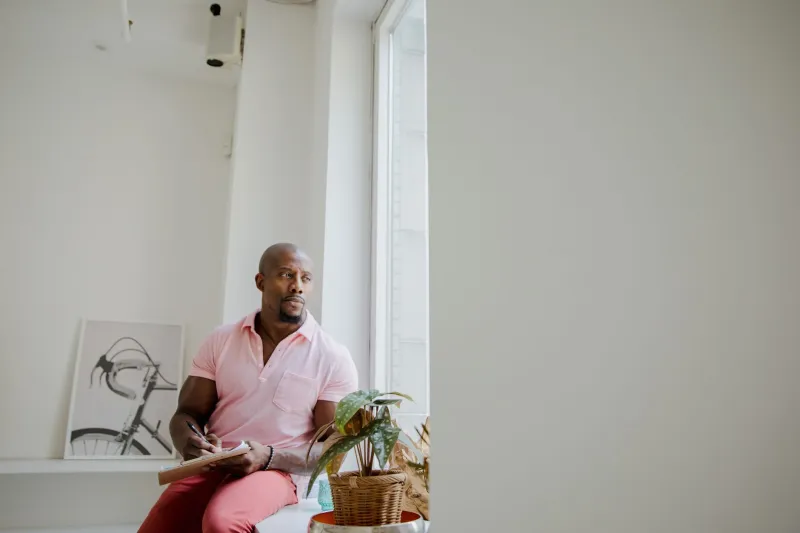
Desk Gains Are Real: The Secret Muscle-Building Method Nobody Around You Will Ever See
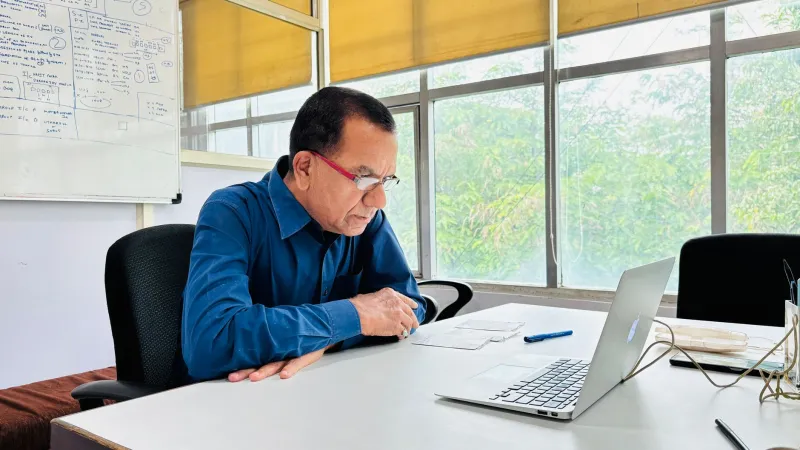
Nobody in Your Next Meeting Will Know You're Working Out
Picture this: you're sitting in a Tuesday afternoon status meeting, nodding along to quarterly projections, and simultaneously contracting your glutes hard enough to crack a walnut. Nobody bats an eye. Nobody knows. But your muscles? They absolutely know.
This is the quiet revolution happening in offices across the country. Busy professionals — people who genuinely cannot carve out an extra hour for the gym — are discovering that meaningful strength training doesn't require a barbell, a locker room, or even a pair of sneakers. It requires understanding one simple principle: your muscles don't care where you challenge them. They only care that you challenge them.
Welcome to what we're calling desk gains — the art of building real, functional muscle strength woven invisibly into your regular workday.
Why Micro-Resistance Actually Works (This Isn't Just Fidgeting)
Before you dismiss this as glorified fidgeting, let's talk about the science for a second. Muscle growth and toning happen when your muscle fibers are placed under tension — specifically, tension that's sustained long enough or repeated frequently enough to trigger adaptation. Traditional gym workouts create this through sets and reps with external load. But there's another way in.
Isometric contractions — where you tense a muscle without moving the joint — generate significant muscular tension. Studies have shown that isometric training can improve strength by up to 15% in targeted muscle groups when performed consistently. And here's the kicker: research on what exercise scientists call "exercise snacking" (short, frequent bouts of physical effort spread throughout the day) shows that cumulative muscle work can rival longer, consolidated sessions for certain strength and endurance outcomes.
In plain terms: a little, often, adds up to a lot.
The Core Moves You Can Pull Off Anywhere
The Invisible Chair Squat Hold
You're already sitting — which means you're already in the bottom position of a squat. Here's how to make it count. Scoot your feet back so they're directly under your knees. Press your feet firmly into the floor, engage your quads like you're about to stand, but don't actually stand. Hold that tension for 20–30 seconds. Release. Repeat four or five times across the day. Your quads, hamstrings, and glutes are all being recruited. Nobody will see a thing.
The Desk Push (No, Not That Kind)
Place both palms flat on the underside of your desk. Push upward as if you're trying to lift it, while keeping your core braced and your back straight. Hold for 10–15 seconds. This isometric press fires up your chest, shoulders, and triceps in a way that would make your bench press proud. Flip it: press your palms down on the desktop and push as if you're trying to compress it through the floor. Now your lats and biceps are in the game.
The Commute Core Brace
Whether you're on the subway, stuck in traffic, or waiting for your coffee to brew, this one travels with you. Take a deep breath in, then exhale fully and brace your entire midsection as if someone's about to throw a slow-motion punch at your stomach. Hold for 10 seconds. Breathe normally, then repeat. This targets your transverse abdominis — the deep core stabilizer that holds everything together and is often completely ignored in traditional ab routines.
The Standing Calf Raise Queue
Every line you stand in is now a training opportunity. Rise slowly onto your toes, pause at the top for two full seconds, then lower back down with control. Do 15–20 reps. Your calves are one of the most stubborn muscle groups to develop — they respond best to high frequency and slow, controlled contractions. The grocery store checkout line just became your calf day.
The Meeting Glute Squeeze Protocol
Back to that Tuesday meeting. Every five minutes, perform a hard glute contraction — both cheeks, maximum effort — and hold for 10 seconds. Set a subtle phone reminder if you need to. Over an eight-hour workday, that's a significant volume of glute work. The gluteus maximus is the largest muscle in your body. Training it frequently, even isometrically, contributes to better posture, reduced lower back pain, and yes — a noticeably stronger backside over time.
Building a Stealth Strength Routine You'll Actually Stick To
The beauty of this approach is that it doesn't compete with your schedule — it hides inside it. The key is anchoring your micro-workouts to things you already do. That's called habit stacking, and it's one of the most reliable ways to build consistency without relying on motivation.
Try this framework:
- Morning coffee brewing → Core brace holds (3 sets of 10 seconds)
- First hour at your desk → Desk push sequence (upper body isometrics)
- Every meeting over 30 minutes → Glute squeeze protocol
- Lunch break standing → Calf raises while waiting for your food
- Afternoon slump (2–4 PM) → Invisible chair squat holds to wake up your legs and boost circulation
- Commute home → Core bracing, shoulder blade squeezes, and neck tension release
None of these require you to change clothes, break a sweat, or explain yourself to a coworker.
What You Can Realistically Expect
Let's keep it honest: desk gains won't replace dedicated strength training if building serious muscle mass is your goal. But for the overwhelming majority of Americans who are largely sedentary during work hours, this approach delivers genuine benefits — improved muscle tone, better posture, reduced tension headaches, stronger core stability, and a metabolism that stays slightly more active throughout the day.
More importantly, it keeps your body in the habit of moving and engaging. And that habit? It tends to spill over. People who start with desk exercises often find themselves more motivated to add a real gym session on weekends, take the stairs, or go for a walk at lunch. The momentum compounds.
You don't need to overhaul your life to get stronger. You just need to stop letting the hours between 9 and 5 go completely to waste.
Your muscles are waiting. Your next meeting starts in five minutes. You know what to do.