What You're Wearing to the Gym Might Be Secretly Wrecking Your Gains
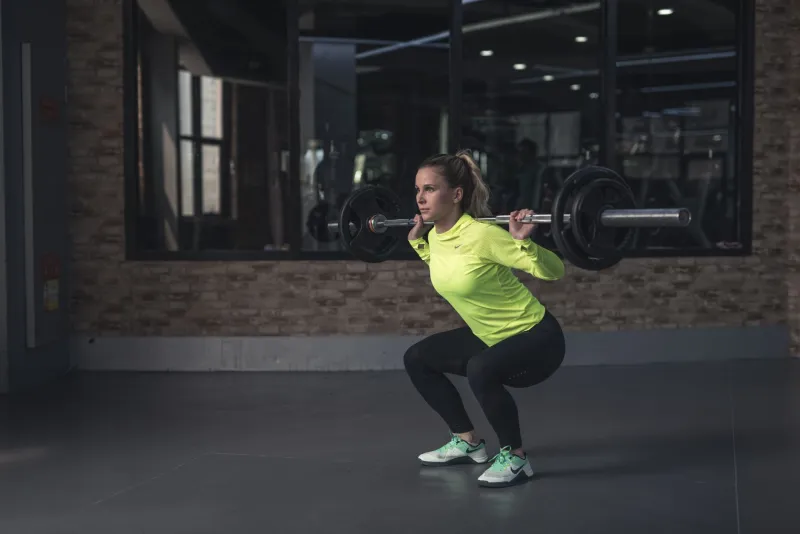
You've been putting in the work. You show up, you lift, you sweat, you track your macros. And yet something still feels a little off — like you're spinning your wheels without quite knowing why. Before you blame your programming or your sleep schedule, take a look at what you're wearing to the gym.
Yeah, seriously. Your clothes.
This isn't about fashion. It's about something called proprioception — your body's built-in GPS system for knowing where your limbs are in space — and how the fabric wrapped around your muscles either helps or hurts that system every single rep.
Your Body Has a Sensory System You've Probably Never Thought About
Proprioception is the reason you can close your eyes and still touch your nose. It's how your nervous system tracks joint angles, muscle tension, and body position in real time. During a squat, a deadlift, or a bench press, your brain is constantly pulling in sensory data from your skin, joints, and muscles to coordinate movement and keep you stable.
Here's where clothing enters the picture: the tactile feedback your skin receives from fitted fabric actually reinforces that proprioceptive signal. When you wear compression-style athletic gear that gently hugs your muscles, your skin receptors pick up on that contact and send clearer positional data back to your brain. The result is more precise movement, better muscle recruitment, and stronger mind-muscle connection — all of which translate directly into more effective training.
When you strip that away, things get fuzzier. And fuzzy proprioception means sloppy mechanics.
The Problem With That Oversized Hoodie You Love
Look, nobody is here to tell you that baggy clothes are evil. But there's a real difference between wearing a relaxed-fit tee and drowning in a triple-XL hoodie that covers your knees.
Loose, shapeless clothing creates several problems during resistance training:
You lose visual feedback. One of the underrated tools for maintaining good form is being able to see your own body move — noticing when your knees cave, your hips shift, or your back rounds. Billowy fabric hides all of that. You can't correct what you can't see.
The fabric can physically interfere with movement. Excess material bunches up during exercises like Romanian deadlifts, front squats, or hip hinges, which can restrict your range of motion or cause you to unconsciously compensate with worse mechanics.
Your mind-muscle connection suffers. When you're trying to really feel your glutes fire during a hip thrust or your lats engage during a pull-up, sensory feedback from fitted clothing helps anchor that awareness. Without it, the signal gets weaker.
Research in sports science has consistently shown that compression garments improve proprioceptive acuity — meaning athletes wearing them demonstrate more accurate joint positioning and better neuromuscular control. That's not a marketing claim from a leggings brand. That's peer-reviewed physiology.
But Restrictive Clothing Isn't the Answer Either
Before you run out and buy the tightest compression gear on the shelf, pump the brakes. There's a sweet spot here, and too tight is just as problematic as too loose.
Clothing that cuts into your skin, digs into your hip flexors, or restricts blood flow creates a different set of issues. Tight waistbands during core work can limit your ability to brace your abdomen properly. Overly constricting tops can actually reduce shoulder mobility during overhead pressing movements. And anything that leaves you tugging, adjusting, or mentally distracted is pulling your focus away from the workout itself.
The goal is supportive fit, not sausage casing. You want fabric that moves with you, follows your body through a full range of motion, and provides consistent contact without cutting off circulation or limiting joint travel.
What to Actually Look For When You Shop
You don't need to spend $120 on a pair of leggings to get this right. Here's what actually matters:
Four-way stretch fabric. Look for materials that stretch in all directions — horizontally and vertically. Polyester-spandex blends (often labeled as elastane or Lycra) are your best bet. They move with your body instead of fighting it.
Fit that stays put. During a workout, your clothes should basically forget they're there. If you're constantly pulling your shorts down, yanking your shirt out of your waistband, or readjusting your waistband mid-set, that's friction you don't need — mentally or physically.
No excess fabric around key joints. Pay particular attention to the knees, hips, and shoulders. These are the areas where movement is most complex and where bunching fabric can interfere most with your mechanics. Fitted panels around these joints help.
Moisture management. This is less about muscle activation and more about comfort and safety — but sweaty, heavy cotton that clings in all the wrong ways can still distort your movement and make you rush through sets just to be done with the discomfort.
Budget-friendly picks exist. Brands like Athleta's sale section, Target's All in Motion line, and Amazon's own athletic basics have come a long way. You're not obligated to blow your gym budget on premium sportswear to get functional, well-fitted gear.
The Mind-Muscle Connection Angle
One more thing worth talking about: intention. The research on mind-muscle connection — deliberately focusing your attention on the muscle you're trying to train — shows meaningful improvements in muscle activation during resistance exercises. Studies have found that consciously thinking about your biceps during a curl, for example, can increase EMG activity in that muscle compared to just going through the motion.
Fitted workout clothing supports this process by giving your nervous system cleaner sensory input to work with. It's like the difference between trying to hear a conversation in a noisy room versus a quiet one. The signal is the same, but the noise-to-signal ratio changes everything.
When your clothes are working with your body's sensory systems instead of muddying them, you get more out of every rep — not because the clothes are doing the work, but because they're letting your nervous system do its job properly.
The Takeaway
Fitness is a game of marginal gains, and this one is genuinely easy to fix. You don't need to overhaul your wardrobe overnight. Just start paying attention to how your clothes fit when you're actually moving — squatting, hinging, pressing, pulling. If they're getting in the way, they're costing you something.
The right gear won't build your muscles for you. But it'll stop quietly working against you every time you show up to try.